

Blog — Nexus Vision Ventures

The Nexus Growth Blog

AI visibility, lead automation, influencer marketing, and local SEO — everything local business owners need to stay ahead in 2026.

AI Search
AI Visibility June 2026 8 min read
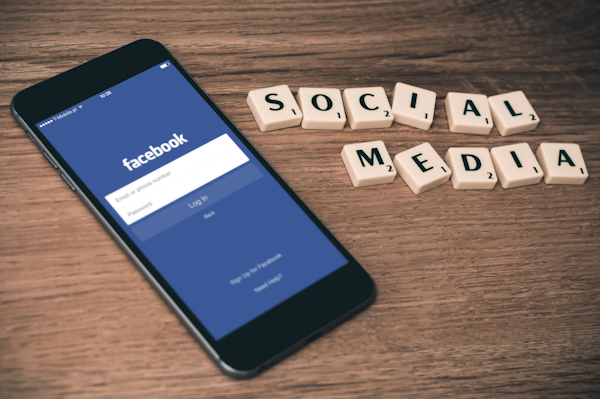
Why Your Local Business Is Invisible to ChatGPT (And What to Do About It)

92% of local businesses don't appear when customers ask AI for recommendations. Here's exactly why — and the specific steps to fix it before your competitors do.

Missed Calls
Automation June 2026 6 min read
The Hidden Cost of Missed Calls: How Local Contractors Lose $50,000+ Per Year

Every unanswered call is money walking out the door. The math is brutal — and most contractors have no idea how much they're losing until they run the numbers.

Influencer Marketing
702 Influence June 2026 7 min read
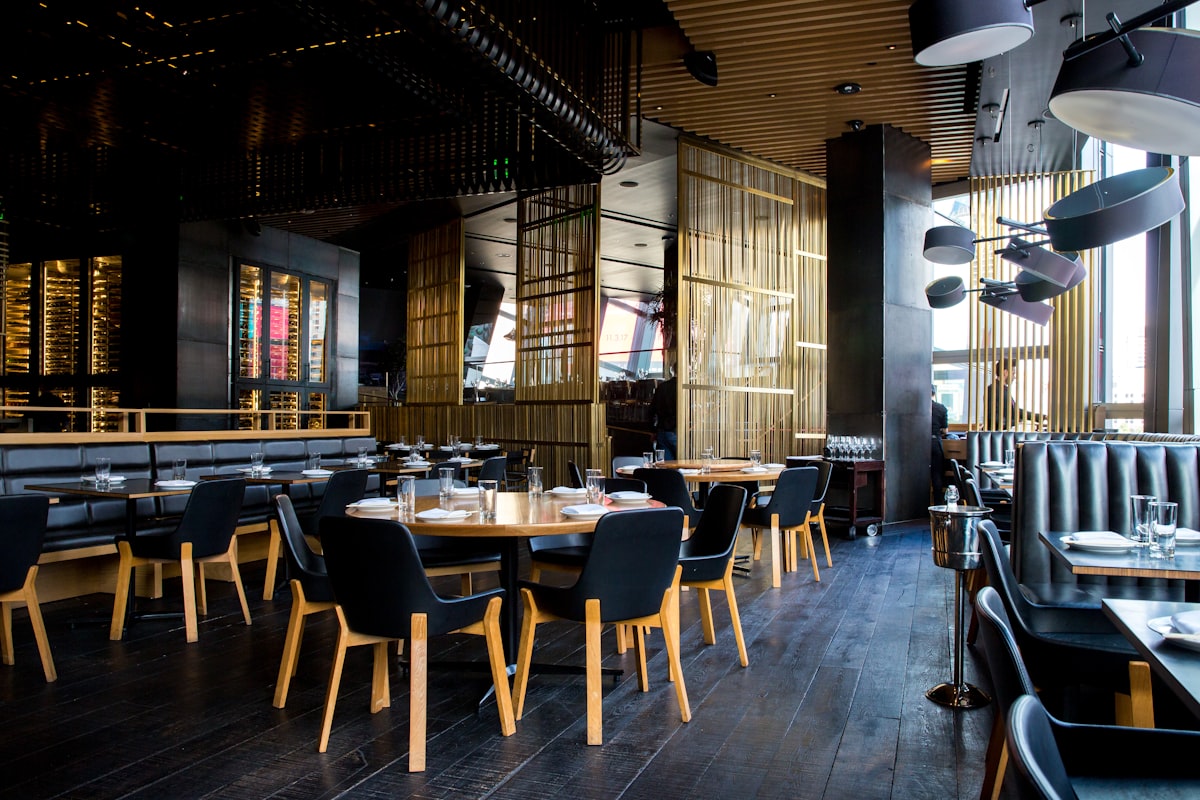
How Local Restaurants Are Using Micro-Influencers to Fill Tables Every Night

Forget celebrity endorsements. The restaurants winning right now are using verified local micro-influencers with 5K–50K followers — and tracking every customer who walks through the door.

Google Business Profile
Local SEO June 2026 9 min read
Google Business Profile in 2026: The 7 Mistakes Killing Your Local Search Ranking

Your Google Business Profile is the single most important factor in local AI recommendations. Most businesses are making at least 4 of these 7 critical mistakes right now.

AI vs Google Search
AI Search June 2026 7 min read
AI Search vs. Google Search: What Local Business Owners Need to Know Right Now

Google and AI search engines use completely different signals to decide who gets recommended. Optimizing for one doesn't mean you're optimized for the other — here's the difference.

Med Spa Case Study
Case Study June 2026 5 min read
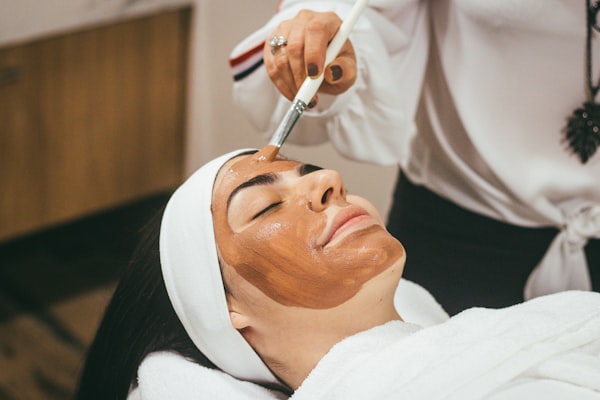
From Invisible to Recommended: How One Med Spa Transformed Their Online Presence in 60 Days

A med spa with a 4.9-star rating and zero AI visibility. Here's exactly what we found, what we fixed, and what changed in the first 60 days after their ClearAI diagnostic.

Why Your Local Business Is Invisible to ChatGPT (And What to Do About It)

92% of local businesses don't appear when customers ask AI for recommendations. Here's exactly why — and the specific steps to fix it before your competitors do.

AI Search Visibility

Something changed in the way customers find local businesses — and most business owners didn't get the memo. AI search engines like ChatGPT, Google AI Overviews, and Perplexity are now the first stop for millions of people looking for local recommendations. Not Google. Not Yelp. AI.

When someone types "best dentist near me" or "top-rated restaurant in my neighborhood" into ChatGPT, the AI doesn't search the web in real time. It pulls from a curated database of businesses it has been trained to trust — based on specific digital signals. If your business doesn't send those signals, you simply don't exist to that AI.

📊 According to our analysis of 1,200+ local businesses across the US, 92% scored below 40/100 on AI visibility metrics — meaning they are effectively invisible to ChatGPT, Gemini, and Perplexity when potential customers ask for recommendations in their category.

Why AI Search Is Different From Google Search

Google ranks websites based on keywords, backlinks, and user behavior signals. AI search engines work differently — they rank businesses based on structured data, authority signals, citation consistency, and content that directly answers the questions customers ask.

A business can rank #1 on Google Maps and be completely invisible to ChatGPT. We've seen this dozens of times. The optimization strategies are different, and most local business owners are only playing the Google game — which means they're losing the AI game by default.

The 5 Reasons Your Business Doesn't Appear in AI Results

1. Your Google Business Profile has critical gaps

AI models like ChatGPT and Google AI pull heavily from Google Business Profile data. If your profile is missing categories, a complete description, service details, or recent photos, the AI has insufficient data to confidently recommend you. Our diagnostics show that GBP gaps account for 34% of AI visibility score deficits on average.

2. Your review profile lacks recency and volume

AI systems use reviews as a trust signal. A business with 200 reviews from 3 years ago scores lower than one with 40 reviews from the last 6 months. Recency matters more than volume. An active review profile signals to AI that your business is still operating and still delivering quality.

3. Your business isn't cited consistently across the web

When your business name, address, and phone number (NAP) appear inconsistently across directories — different spelling here, old address there — AI models lose confidence in recommending you. Citation consistency is one of the most overlooked factors in AI visibility.

4. Your website content doesn't answer customer questions

AI models favor businesses whose websites directly answer the questions customers ask. "What are your hours?" "Do you offer emergency services?" "What's your service area?" If your website doesn't answer these clearly, you're not giving the AI the data it needs to recommend you.

5. Your social media presence is inconsistent

Irregular posting, inconsistent branding, and low engagement signal to AI that a business may not be actively operating. Regular, structured content — especially content that uses location-specific keywords — feeds AI recommendation systems directly.

💡 Key insight: Businesses that appear in AI results consistently share one trait — they have a complete, consistent, active digital footprint across Google, social media, and directories. It's not about gaming an algorithm. It's about being genuinely present online.

What "GEO Optimization" Means and Why You Need It

There's a new term in the digital marketing world: GEO Optimization — Generative Engine Optimization. It refers specifically to the practice of optimizing your digital presence for AI search engines, as opposed to traditional SEO which targets Google's crawling algorithm.

GEO optimization involves structuring your content so AI models can clearly understand what you do, where you do it, who you serve, and why customers trust you. It's less about keyword stuffing and more about clarity, authority, and consistency.

How to Start Fixing Your AI Visibility Today

  1. Run a free AI visibility scan — Find out your current AI Health Score across ChatGPT, Gemini, Perplexity, and Claude before doing anything else.
  2. Audit your Google Business Profile — Fill every field, add recent photos, respond to every review.
  3. Fix citation inconsistencies — Audit your business name, address, and phone across all directories.
  4. Create structured content — FAQ pages, service pages with specific location keywords, and regular social media posts.
  5. Generate fresh reviews — Implement a system to consistently get new reviews from satisfied customers.

Find out your AI Visibility Score — free in 10 seconds

Our free scan checks your business across ChatGPT, Gemini, Perplexity, and Claude and shows you exactly where you stand. No credit card, no commitment.

Run my free scan →

The window to act is now. Every month that passes, more of your competitors are adapting to AI search — and the gap between AI-visible and AI-invisible businesses is widening. The businesses that optimize for AI search today will own the recommendations tomorrow.

The Hidden Cost of Missed Calls: How Local Contractors Lose $50,000+ Per Year

Every unanswered call is money walking out the door. The math is brutal — and most contractors have no idea how much they're losing until they run the numbers.

Missed Calls Cost

Here's a question most contractors never ask themselves: How much money did I lose last week to voicemail?

Not revenue you lost to a competitor's better pricing. Not jobs that fell through. Revenue that evaporated silently because a phone rang while you were under a sink, on a roof, or in a crawl space — and nobody answered it.

📞 The average local contractor misses 5–8 inbound calls per day. At an average job value of $350–$500, that's $1,750–$4,000 in potential revenue lost every single day to unanswered calls.

The Math Most Contractors Refuse to Run

Let's be conservative. Say you miss 3 calls per day. Half of those are genuine leads — people ready to hire. Your average job is worth $400. You convert 60% of the leads you actually speak with.

That's 1.5 jobs/day lost. At $400 average, that's $600/day. Over a 250-day work year: $150,000 in revenue that went to someone who picked up the phone.

Even cutting that estimate in half — $75,000 per year in missed revenue — is enough to change the trajectory of any contracting business.

Why Contractors Keep Missing Calls (It's Not Laziness)

The problem isn't discipline or effort. Contractors miss calls because they're doing the job. You're on a ladder, operating equipment, in a meeting with a client, or driving between jobs. You physically cannot answer a ringing phone every time it rings — and you shouldn't have to.

The solution isn't to hire a receptionist at $35,000–$45,000 per year. The solution is AI-powered lead capture that responds to every missed call in under 5 seconds.

What Happens When You Don't Call Back Fast Enough

Research on lead response time consistently shows the same thing: the odds of connecting with a lead drop by 80% if you wait more than 5 minutes to respond. When someone needs a plumber or an HVAC technician, they're calling multiple businesses simultaneously. The first one to respond gets the job.

A customer with a burst pipe at 2am isn't waiting for your 9am callback. They're calling the next number on the list — and that contractor picks up, or at least texts back immediately.

How NOVA AI Captures Every Lead While You Work

NOVA AI by Nexus Automation is built specifically for local service businesses. When a call goes unanswered, NOVA sends an automatic text response in under 5 seconds — in English or Spanish — starting a conversation that qualifies the lead and books an appointment on your calendar.

The customer gets an immediate response. You get a qualified lead delivered to your phone without interrupting your work. And your competitor gets nothing.

  • Response time: Under 5 seconds after every missed call
  • Bilingual: Automatic English and Spanish responses
  • Lead qualification: NOVA asks the right questions to qualify before you call back
  • Calendar booking: Appointments scheduled automatically
  • 24/7 operation: Works nights, weekends, and holidays

💰 ROI reality check: If NOVA captures just 2 additional jobs per week at an average of $400 each, that's $3,200/month in recovered revenue — against a monthly cost of $497–$997. The math is straightforward.

The Businesses That Benefit Most

Missed call automation delivers the highest ROI for businesses where inbound calls are the primary lead channel and job values are high. This includes:

  • Plumbers and HVAC technicians
  • Electricians and general contractors
  • Bail bond agents
  • Med spas and medical practices
  • Law firms and legal practices
  • Wedding chapels and event venues

Stop losing jobs to voicemail — NOVA AI is live in 48 hours

Neo Boost starts at $497/month. No long-term contract. Your AI receptionist will be capturing leads before the end of the week.

See how NOVA works →

How Local Restaurants Are Using Micro-Influencers to Fill Tables Every Night

Forget celebrity endorsements. The restaurants winning right now are using verified local micro-influencers with 5K–50K followers — and tracking every customer who walks through the door.

Restaurant Influencer Marketing

The era of buying a TV spot or a billboard and hoping customers show up is over. Local restaurant marketing in 2026 is built on trust — and nothing builds trust faster than a recommendation from someone your potential customer already follows.

That's the core insight behind micro-influencer marketing for restaurants. Not mega-influencers with 2 million followers and audiences spread across 50 states. Local micro-influencers with 5,000–50,000 highly engaged, geographically concentrated followers who actually eat at restaurants in your city.

Why Micro-Influencers Outperform Macro-Influencers for Local Restaurants

It sounds counterintuitive. Wouldn't more followers mean more customers? Not when it comes to local businesses. A food influencer with 500,000 followers spread across the country drives very few actual visits to a specific restaurant in Las Vegas or Austin or Miami. But a local food blogger with 12,000 followers — 80% of whom live within 10 miles of your restaurant — can fill your dining room on a Tuesday night.

📊 Micro-influencers (10K–100K followers) generate 60% higher engagement rates than macro-influencers, and their audiences are significantly more likely to act on recommendations because the relationship feels personal and authentic.

The 702 Shield: Tracking Every Customer at the Door

The biggest objection restaurant owners have to influencer marketing is measurement. "How do I know if it actually worked?" It's a fair question — and it's one that most influencer agencies can't answer.

702 Shield is our proprietary foot traffic tracking system that measures exactly how many customers came through your door as a direct result of an influencer campaign. Not impressions. Not likes. Actual bodies in seats.

This is the game-changer that separates real influencer marketing ROI from vanity metrics. You know exactly what you're getting for every dollar spent.

What a Successful Restaurant Micro-Influencer Campaign Looks Like

Week 1–2: Influencer Selection

We identify and vet local food influencers whose audience demographics match your ideal customer. We verify follower authenticity, engagement rates, and geographic concentration. No fake accounts. No inflated metrics.

Week 3: Campaign Launch

Selected influencers visit your restaurant, create authentic content — stories, reels, posts — and share it with their audience. Content feels organic because it is. We never script overly promotional copy.

Week 4+: Tracking and Reporting

702 Shield tracks foot traffic attribution. You receive weekly reports showing reach, engagement, and most importantly — how many new customers walked through your door.

English and Spanish Campaigns: Reaching Every Customer

In cities with large Hispanic communities — Las Vegas, Miami, Houston, Los Angeles — running campaigns in both English and Spanish dramatically expands your reach and signals cultural respect to potential customers. Our 702 Influence campaigns are fully bilingual by design.

What Restaurants Are Getting Wrong With Influencer Marketing

  • Choosing influencers based on follower count alone — engagement rate and audience location matter more
  • Scripting overly promotional content — authentic posts always outperform obvious ads
  • Running one-off campaigns — consistent monthly campaigns build cumulative brand recognition
  • Not tracking foot traffic — without attribution data, you're flying blind
  • Ignoring Spanish-speaking audiences — a significant and underserved market in most US cities

Ready to fill more tables with 702 Influence?

Campaigns start at $997/month. No long-term contracts. 702 Shield tracking included on every campaign.

Book a consultation →

Google Business Profile in 2026: The 7 Mistakes Killing Your Local Search Ranking

Your Google Business Profile is the single most important factor in local AI recommendations. Most businesses are making at least 4 of these 7 critical mistakes right now.

Google Business Profile

If you had to choose one digital asset to optimize for local search visibility in 2026 — Google, AI search engines, Maps, everything — it would be your Google Business Profile (GBP). It's the single most powerful factor in whether AI systems recommend your business to local customers.

And yet, in our analysis of hundreds of local business profiles, we consistently find the same critical mistakes being made — mistakes that silently suppress rankings across both Google and AI search engines.

📍 In our ClearAI diagnostic data, incomplete or inaccurate Google Business Profiles account for 34% of AI visibility score deficits on average — making it the single largest fixable factor in local AI invisibility.

Mistake #1: Choosing the Wrong Primary Category

Your primary business category is one of the most important signals Google and AI use to decide when to show your business. Choosing a broad category like "Restaurant" instead of "Mexican Restaurant" or "Italian Restaurant" puts you in direct competition with every restaurant in your city — a battle you can't win.

Fix: Choose the most specific primary category that accurately describes your business. Add secondary categories for every relevant service you offer.

Mistake #2: An Incomplete Business Description

Google gives you 750 characters for your business description. Most businesses use fewer than 100 — and those 100 characters are usually a generic tagline that tells the AI nothing useful. Your description should include your primary service, your location, your differentiators, and the specific customer problems you solve.

Fix: Write a complete, keyword-rich description that reads naturally and includes your city, neighborhood, primary services, and what makes you different.

Mistake #3: Outdated or Missing Hours

AI systems are heavily penalized by outdated information. If your listed hours don't match your actual hours — or if you haven't updated your holiday hours — AI models lose confidence in your profile and are less likely to recommend you. An AI that recommends a business that turns out to be closed loses credibility with the user. It won't risk it.

Fix: Audit your hours monthly. Update for every holiday and seasonal change. Use Google's "Special Hours" feature proactively.

Mistake #4: No Recent Photos

Businesses with recent, high-quality photos receive significantly more profile views and customer actions than those without. More importantly, regular photo uploads signal to Google and AI that your business is actively operating — a key trust factor. Profiles with no photos from the last 90 days are flagged as potentially inactive.

Fix: Upload at least 4–6 new photos per month. Include interior shots, exterior shots, team photos, and product/service photos.

Mistake #5: Ignoring Customer Reviews

Not getting reviews is bad. Getting reviews and not responding to them is almost as bad. AI systems use response rate and response quality as authority signals. A business that responds to every review — positive and negative — demonstrates engagement and trustworthiness that AI models factor into recommendations.

Fix: Respond to every review within 48 hours. For negative reviews, acknowledge the concern, offer a resolution, and take the conversation offline. Never argue publicly.

Mistake #6: No Products or Services Listed

The Products and Services sections of your GBP are direct signals to AI about what you offer. If these sections are empty, the AI has less data to work with when matching your business to customer queries. Every service you offer should be listed with a description and price range where applicable.

Fix: Add every service you offer as a separate listing. Include descriptions with relevant keywords and price ranges where you're comfortable sharing them.

Mistake #7: No Q&A Section Management

Google allows anyone to ask questions on your GBP — and anyone to answer them. This means misinformation can appear on your profile without your knowledge. Worse, AI systems pull from Q&A data to answer queries about your business. Incorrect answers in your Q&A get fed directly into AI responses about your business.

Fix: Check your Q&A section weekly. Answer every question yourself — accurately and completely. Pre-populate common questions with your own accurate answers before customers have to ask.

🔧 Quick audit checklist: Primary category ✓ · Complete description ✓ · Current hours ✓ · Recent photos ✓ · Review responses ✓ · Services listed ✓ · Q&A managed ✓. If you can't check all 7, you have work to do.

Get a complete GBP audit with your ClearAI Diagnostic Report

Our 15-page diagnostic identifies every gap in your Google Business Profile — and gives you a specific action plan to fix it. $297, delivered in 48 hours.

Order my diagnostic →

AI Search vs. Google Search: What Local Business Owners Need to Know Right Now

Google and AI search engines use completely different signals to decide who gets recommended. Optimizing for one doesn't mean you're optimized for the other.

AI vs Google Search

For 20 years, "getting found online" meant one thing: ranking on Google. Build a website, get some backlinks, optimize for keywords, and hope the algorithm smiles on you. That era isn't over — but it's no longer enough.

A new category of search has emerged, and it's growing faster than anyone predicted: AI-powered answer engines. ChatGPT, Google AI Overviews, Perplexity, Claude, Gemini — these platforms now answer millions of local search queries every day, and they use fundamentally different signals than Google's traditional search algorithm.

How Traditional Google Search Works

Google's traditional search algorithm ranks pages based on:

  • Keywords — how well your content matches the search query
  • Backlinks — how many authoritative sites link to you
  • User behavior — click-through rates, time on site, bounce rates
  • Technical SEO — page speed, mobile optimization, structured data
  • Google Business Profile — for local searches specifically

How AI Search Engines Work Differently

AI answer engines don't just match keywords — they synthesize information from multiple sources to generate a confident recommendation. They're looking for:

  • Citation consistency — your NAP (Name, Address, Phone) matching across all directories
  • Content that answers questions — not keyword-stuffed pages, but pages that genuinely answer what customers ask
  • Authoritative mentions — being cited by local news, review sites, and other trusted sources
  • Review quality and recency — fresh, detailed reviews with relevant keywords
  • Structured data markup — technical code that helps AI understand what your business does
  • Social proof signals — consistent social media presence and engagement

The key difference: Google ranks pages. AI search engines rank businesses — based on the totality of their digital presence across the entire web. A great website with poor off-site signals still fails AI search.

Can You Rank on Google But Not on AI Search?

Absolutely — and this is one of the most common patterns we find in our ClearAI diagnostics. A business can rank #1 on Google Maps for "best pizza near me" and score 12/100 on AI visibility. We've seen this hundreds of times.

Why? Because Google Maps ranking relies heavily on proximity and GBP optimization. AI visibility requires a broader, more holistic digital presence that includes consistent citations, authoritative content, structured data, and a strong review velocity.

What Is GEO Optimization and Why Does It Matter?

GEO Optimization — Generative Engine Optimization — is the emerging practice of optimizing specifically for AI search engines. It's distinct from traditional SEO and requires a different set of tactics:

  • Writing content in a Q&A format that AI models can directly cite
  • Ensuring schema markup (structured data) is implemented correctly
  • Building a comprehensive citation profile across all relevant directories
  • Generating reviews that contain specific, relevant keywords
  • Creating content that establishes topical authority in your service category

The Window of Opportunity Is Closing

Right now, most local businesses haven't heard of GEO optimization. That's your advantage. The businesses that build AI visibility now — before their competitors even understand what it is — will own the recommendations for years to come. Once AI search behavior is fully established and your competitors have caught up, the window closes.

The question isn't whether to optimize for AI search. It's whether you do it before or after your competitors.

See exactly where you stand on AI search vs. Google search

The free ClearAI scan shows your AI Health Score across ChatGPT, Gemini, Perplexity, and Claude — and compares it against your Google presence. Takes 10 seconds.

Run my free scan →

From Invisible to Recommended: How One Med Spa Transformed Their Online Presence in 60 Days

A med spa with a 4.9-star rating and zero AI visibility. Here's exactly what we found, what we fixed, and what changed in the first 60 days.

Med Spa Case Study

When a med spa owner reached out to us, she was frustrated. Her practice had a 4.9-star Google rating, a loyal client base, and a beautiful facility. But new patient inquiries had plateaued — and she couldn't figure out why.

"I do everything right," she told us. "Great reviews, active Instagram, nice website. But I'm not getting the new clients I used to." What she didn't know was that she was virtually invisible to the AI search engines where new patients were now starting their search.

The Diagnostic: What We Found

Her ClearAI Diagnostic Report revealed an AI Health Score of 22/100 — classified as Critical. Here's what was driving the low score:

  • AI Search Visibility: 8% — Zero mentions across ChatGPT, Gemini, Perplexity, and Claude for any target search query
  • Google Business Profile: 31% — Missing service details, no Q&A management, photos older than 6 months
  • Citation Consistency: 19% — Business name listed differently across 6 directories (with and without "Med Spa" in the name)
  • Review Velocity: 45% — Strong rating but only 3 new reviews in the last 90 days
  • GEO Optimization: 4% — No structured data markup, no Q&A content on the website

💡 The core problem: Her Google presence was good but shallow. AI systems need depth — consistent citations, fresh signals, and structured data — to confidently recommend a business. She had the reputation without the infrastructure.

The Action Plan: 3 Priority Fixes

Priority 1: Citation Cleanup (Week 1–2)

We standardized her business name, address, and phone number across 23 directories. This alone — fixing the inconsistency between "Glow Med Spa" and "Glow Medical Spa" — significantly improved her citation authority score within two weeks.

Priority 2: GBP Deep Optimization (Week 2–3)

We rewrote her Google Business Profile description with location-specific keywords, added all services to the Services section, uploaded 12 new photos, and pre-populated the Q&A section with 15 common patient questions and accurate answers. We also set up a review response template and began responding to every review within 24 hours.

Priority 3: Structured Data + Content (Week 3–6)

We added schema markup to her website for local business and medical spa categories, created a FAQ page targeting the exact questions patients ask AI search engines, and implemented a review generation system that increased her review velocity from 1–2 per month to 8–10 per month.

The Results at 60 Days

Her AI Health Score went from 22/100 to 67/100 in 60 days — moving from Critical to Moderate, approaching Optimized.

More importantly — practical results:

  • ChatGPT now mentions her practice in response to "best med spa near [her city]" queries
  • New patient inquiries increased 43% compared to the prior 60-day period
  • Google Maps ranking improved for 8 of her target keywords
  • Review velocity went from 2/month to 9/month

📈 "I had no idea this was even a category of problem I needed to fix. I thought I was doing everything right. The diagnostic showed me exactly what was invisible — and the fixes were surprisingly specific and actionable." — Med spa owner, 60-day follow-up

What This Means for Your Business

This med spa's situation is not unusual. Most local businesses with strong Google ratings and good reputations are still scoring below 40/100 on AI visibility — because AI search optimization requires a different set of actions than traditional Google SEO.

The good news: the fixes are specific, executable, and they work. The bad news: every month you wait is another month your competitors are getting the AI recommendations you're missing.

Get your diagnostic — find out your real AI Health Score

The same 15-page diagnostic that revealed this med spa's hidden gaps is available for your business. $297, delivered in 48 hours. Full action plan included.

Order my diagnostic report →